Frankensteinʼs Monster
The Enigmatic Presence of Frankenstein’s Monster
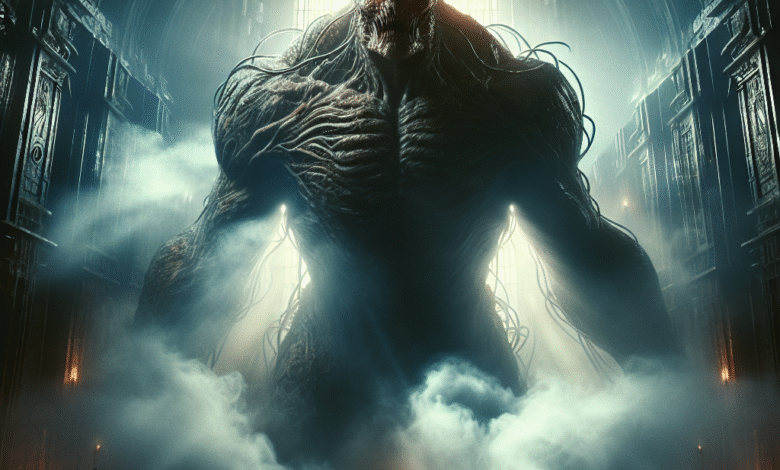
In the dim corridors of literary history, where shadows intertwine with the flickering of candlelight, a grotesque creation looms—a creature stitched together from the remnants of the dead. Known widely as Frankenstein’s Monster, this tragic figure has traversed centuries, igniting the imaginations of countless generations. More than a mere figure of horror, the Monster serves as an unsettling reflection of humanity’s darker inclinations and an exploration of the ethics of creation.
Origins: A Spark in the Dark
The inception of Frankenstein’s Monster can be traced back to Mary Shelley’s groundbreaking novel, "Frankenstein; or, The Modern Prometheus," published in 1818. At just eighteen years of age, Shelley penned her masterpiece during a fateful summer spent in the company of George Gordon, Lord Byron, and Percy Bysshe Shelley near Lake Geneva. After a ghost story competition led to the conception of her tale, Shelley began to unfurl a narrative that questioned the boundaries of science and morality.
The cornerstone of Shelley’s work lies in the character of Victor Frankenstein, a passionate scientist who, defying the natural order, constructs life from cadaverous parts. When the creature awakens, it is met not with the love it craves but with horror and rejection. This brutal abandonment forges the identity of the Monster—an entity caught between the noble aspiration of existence and the grotesque reality of its creation.
Cultural and Historical Background
Rooted in the tumultuous landscape of the early 19th century, Shelley’s work was significantly influenced by the scientific advancements of the time, particularly discussions around galvanism and the possibility of reanimating the dead. Amid the rise of the Industrial Revolution and the ensuing philosophical debates regarding human responsibility and the nature of life, Frankenstein’s tale serves as a critique of ethical oversight in scientific endeavors.
Moreover, the Monster embodies the fear of the "other," symbolizing societal perceptions of those who are different or misunderstood. Many scholars argue that it is not merely the Monster but Victor himself who embodies humanity’s hubris—an incessant quest for knowledge that often leads to catastrophic consequences. This duality complicates the archetype of the monster as an indisputable villain, adding layers of empathy to a being that, at its core, simply wishes to belong.
Sightings and Legends
While Frankenstein’s Monster is primarily a fictional creation, its essence permeates urban legends and folklore. Many sightings hinge on the belief that the secrets of creating life could be unearthed in hidden laboratories tucked away in desolate landscapes. Some whispers claim that these clandestine experiments have led to manifestations of creature-like beings—specters reminiscent of Shelley’s Monster, wandering through shadowed alleys or lurking in the abandoned halls of old asylums.
In modern lore, urban legends have sprouted from whispers of reanimation experiments conducted by rogue scientists. Such tales often converge in eerie abandoned locations, where the echoes of a time long gone meld with the stories of Frankenstein’s Monster to conjure visceral fear and intrigue.
Popular Culture: A Timeless Terror
The cultural footprint of Frankenstein’s Monster expands far beyond the pages of Shelley’s novel. The first significant film adaptation appeared in 1910, with Thomas Edison’s silent film “Frankenstein,” which set the stage for the myriad of interpretations to follow. However, it was Boris Karloff’s 1931 portrayal in Universal Pictures’ "Frankenstein" that solidified the Monster’s iconic presence in cinema. With its flat head, bolts in the neck, and lumbering gait, Karloff’s iteration introduced an archetype that has since thrived in horror films.
Throughout the decades, the Monster has undergone various transformations. From the comedic interpretations seen in Mel Brooks’ "Young Frankenstein" to the romanticized oddities of “The Bride of Frankenstein,” the character’s portrayal has evolved, yet it retains a core of tragic melancholy. In the 1990s, films like “Mary Shelley’s Frankenstein” sought to return to the source material, diving deeper into the philosophical and existential themes present in Shelley’s work.
The Monster has also permeated video games, appearing in titles like “Castlevania” and “Monster High,” reaching a youthful audience and reminding players of the creature’s indelible mark on pop culture. Each appearance reiterates the duality of the Monster—a brute feared and a victim yearning for connection.
A Creepy Fun Fact
As an unsettling footnote to the legend of Frankenstein’s Monster, behold this chilling urban legend—rumor has it that the original manuscripts of Shelley’s "Frankenstein," particularly the scribbles and edits, are imbued with stories of strange happenings. Some say that those who have delved too deeply into Shelley’s life have stumbled upon reflections of their own shadows, experiencing inexplicable phenomena around the time of the Monster’s creation anniversary each January. From flickering lights to peculiar whispers echoing in the night, the remnants of the tale may indeed awaken a response from realms unseen.
In whatever form it may take, Frankenstein’s Monster continues to haunt our collective consciousness, embodying the eternal struggle between creation and destruction. Its story invites us to gaze into the abyss of our own fears—both of the unknown and of ourselves.