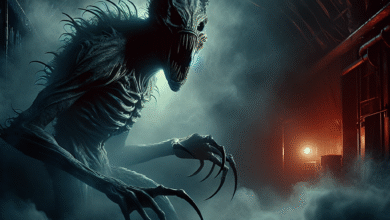
Poltergeist
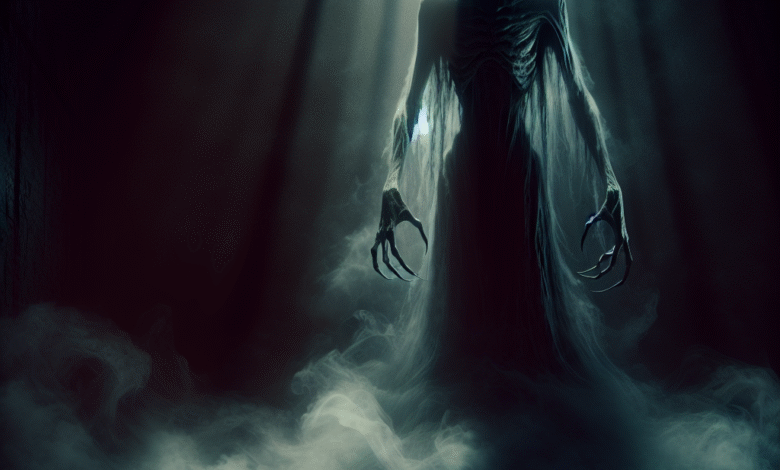
The Enigmatic Poltergeist: A Haunting Presence Across Cultures
Every creak of a floorboard and flicker of a light can send shivers down the spine when we dare to ponder the existence of spirits. Among the myriad of supernatural entities that haunt the annals of folklore, none are as mischievous and chaotic as the poltergeist. The term “poltergeist” itself conjures images of disembodied entities causing mayhem, and this is indeed what makes them so fascinating—and terrifying.
Origin and Etymology
The word “poltergeist” originates from the German terms poltern, meaning “to rumble or to make a noise,” and geist, meaning “spirit.” This etymology gives us the first hint into the nature of a poltergeist: an entity that makes its presence known through sound and physical disturbances. Historical records suggest that the first documented encounters with poltergeists appeared in 16th-century Germany, but accounts of similar phenomena stretch back even further into antiquity.
In ancient cultures, particularly within the realms of Norse mythology and early Celtic traditions, unquiet spirits were believed to exist—often tied to specific locations or distressed souls who could not find peace. The idea of a spirit causing ruckus in the world of the living transcended cultural boundaries, presenting variations of this haunting phenomenon.
Cultural and Historical Background
Poltergeist activity is characterized by inexplicable noises, such as knocks and bangs, as well as physical manifestations—objects being moved or thrown, lights flickering, and even temperature changes in the environment. Unlike ghosts, often perceived as residual humans lingering in a space, poltergeists tend to have an interactive, aggressive demeanor, possibly hinting at a more primal essence.
The phenomenon is frequently associated with adolescents, particularly teenage girls undergoing emotional turbulence. Some researchers and parapsychologists theorize that poltergeist activity may stem from repressed energy, manifesting as chaotic disturbances during times of emotional upheaval. This psychological perspective adds a fascinating layer to the poltergeist narrative, suggesting that the living can inadvertently summon the restless spirits.
Sightings and Legends
One of the most famous poltergeist cases occurred in 19th-century England at the Borley Rectory, where the ghostly manifestations led to widespread investigation and sensational media coverage. The vocal supernatural disturbances claimed to be the work of a nun cursed to wander the site. In 1958, another infamous case unfolded in a home in Rosenheim, Germany, where a poltergeist plagued a family for several years—lights would inexplicably flash and furniture was upended, unnerving the residents.
Many believe that these hauntings exist as an intersection of the unseen and the seen, drawing stories from the depths of human emotion and societal fears. In different cultures, the poltergeist takes on various names—ranging from the Japanese zashiki-warashi (a child-like spirit causing mischief) to the more ominous Murmur found in Slavic folklore. These differences paint a wide tapestry of supernatural lore, building a picture of an entity that invokes a sense of the unknown.
Appearances in Popular Culture
The poltergeist has also made an indelible mark on popular culture. Perhaps most famously, the film “Poltergeist” (1982) directed by Tobe Hooper and produced by Steven Spielberg, catapulted the idea of restless spirits into the mainstream. This iconic horror film depicted a suburban family terrorized by supernatural phenomena, compelling audiences to question the fabric of reality. Life-like dolls, zany television static, and eerie child abductions were just the tip of the poltergeist iceberg, riddled with a legacy that stands strong in the horror genre.
Additionally, literature has embraced the haunting nature of poltergeists, with authors like Stephen King and Shirley Jackson weaving them into tales of psychological horror. The chilling narratives explore not only the terror invoked by these spirits but also the emotional currents that underpin the chaos they create. Video games like “Phasmophobia” have also introduced poltergeist mechanics, allowing players to interact with these supernatural entities in a virtual setting, further amplifying their mystique.
Uncanny Urban Legends
As with any supernatural phenomenon, urban legends abound. One particularly spine-tingling story involves a family that decided to play with a Ouija board, inadvertently summoning a poltergeist. Objects around the home began to move on their own, and the sounds of laughter could be heard, often in the dead of night. Ultimately, as the disturbances escalated, family members fell into chaos, with some claiming they were being driven apart by the spirit. The unsettling implication? Sometimes, opening the door to the supernatural is something we can’t easily close again.
Creepy Fun Fact
Legend has it that poltergeist activity tends to peak around auspicious events or significant life changes, such as childbirth or marriages. This connection between human life and restless spirits hints at a haunting coexistence that is as mesmerizing as it is eerie. Thus, consider this: the next time you hear unexplained knocks in your home or feel an unsettling chill, it may just be a poltergeist taking particular interest in your life’s turning points. But, be cautious—some doors, once opened, may never truly close.
The poltergeist, with its blend of chaos and compassion, embodies the mysteries that dwell in the gray area of the living and the dead, reminding us that the world beyond may be closer than we think.