Rusalka
The Enchanting Terror of the Rusalka: A Deep-Dive into Water’s Siren
In the murky depths of Eastern European folklore lies a haunting figure that has captivated and terrified generations: the Rusalka. Shimmering like the moonlight reflecting on dark waters, these supernatural beings embody the duality of beauty and danger, enticing the unwary with their enchanting voices before dragging them into the depths of oblivion. Their story, rooted in the rich tapestry of Slavic cultural history, paints a vivid portrait of love, betrayal, and treachery.
Origin and Cultural Significance
The Rusalka finds its origins in Slavic mythology, where the creature is often portrayed as a beautiful young woman, her long hair flowing like river currents and her skin gleaming with an ethereal glow. Typically associated with bodies of water—rivers, lakes, and ponds—these spirits were believed to represent the souls of young women who had died prematurely, often due to tragic circumstances such as drowning, unrequited love, or even childbirth.
In some tales, the Rusalka serves as a guardian of nature, embodying the spirit of the water itself. During the spring, when the ice melts and the waters awaken, Russian villages would celebrate the Rusalka Week—a series of rituals to appease these water spirits. Young women would engage in dances and display offerings, hoping to honor the Rusalki and stay protected from their capricious wrath. However, should the rituals fail, the Rusalka could easily transform into a vengeful specter, luring men to their watery doom with a siren’s song that echoed through the forests.
Legends and Sightings
Countless tales surround the Rusalka, marking her as both a seductress and a vengeful spirit. One popular legend tells of a young maiden who was betrayed by her lover. In her sorrow, she flung herself into a river, vowing vengeance on all men who dared to approach the water. Those unlucky enough to hear her haunting whispers would find themselves irresistibly drawn to the water’s edge, where the Rusalka would ensnare them, dragging them deep below the surface.
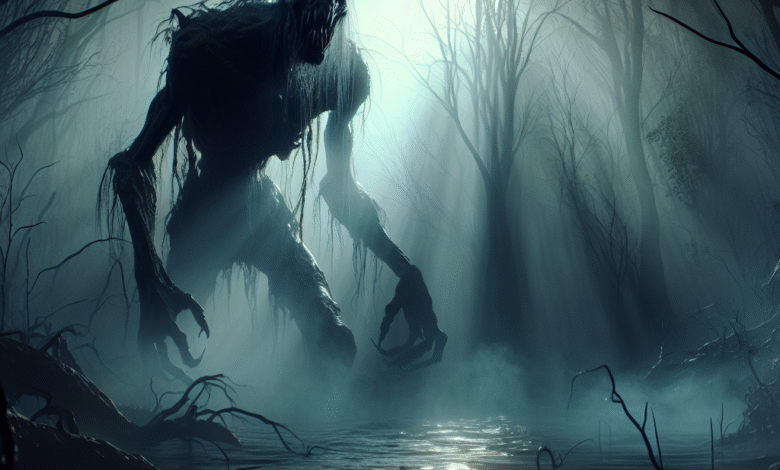
Reports of Rusalka sightings often spotlight their enchanting songs resonating on moonlit nights. Those who have claimed to encounter one describe a serene beauty amidst a fog-laden lake, where the air seems thick with a sense of foreboding. Fishermen recount eerie encounters; boats drifting aimlessly, only to find themselves smothered in an otherworldly silence, before frantically retreating as shadows flicker just beneath the water’s surface.
Adding to the Rusalka’s chilling allure, some believe that after the Rusalka collects souls, she entwines them in her long tresses, weaving them into the aquatic fabric of the lakes and rivers she inhabits, a spectral hook for future victims.
Popular Culture
The Rusalka has not stayed confined to the remote banks of folklore but has leapt into modern popular culture, casting ripples across books, films, and video games. Perhaps most notably, Antonín Dvořák’s opera Rusalka tells the tragic love story of a water nymph who yearns for a human soul and life on land. Her haunting aria “Song to the Moon,” where she implores the moon to bring her lover to her, leaves audiences with a blend of longing and sorrow that reflects the creature’s origins steeped in loss.
In contemporary literature, the Rusalka appears in various forms, often serving as a metaphor for the complexities of feminine power and rage. Notable illustrations can be found in Neil Gaiman’s work Sandman, where they meld the mythos of these ethereal beings with modern storytelling intricacies.
In the realm of video games, the Rusalka is often featured as an enchanting yet fearsome character. Titles like The Witcher series incorporate Rusalka-like creatures, showcasing their seductive nature juxtaposed with destructive capabilities. Players, lured by their beauty, soon learn that engaging with these spirits often leads to dire consequences—reinforcing the cautionary tales of yore.
Conclusion: A Spooky Fun Fact
The Rusalka’s mystique does not end with her haunting beauty and tragic past. According to urban legend, to spot a Rusalka at midnight, an individual must stand by a lake and gaze into the water. If they see their reflection distorted or twisted into something sinister, it is said that they have attracted the attention of the Rusalka herself. Should the Rusalka decide to appear? Only time will tell what fate awaits those who dare to gaze too deeply into her watery realm.
So, the next time you find yourself near a quiet lake on a moonlit night, remember the tale of the Rusalka. Her song might just beckon you closer—leaving you to wonder if her siren’s call is a promise of beauty or a chilling reminder of impending doom. Dare you answer?